
Google Ads Management Services
A Certified Google Ads Marketing Company In India
Are you looking for the best Google ads management services in India? Eglogics Softech is a leading Google ads marketing company in India.
We have worked with many international businesses and provided the best Google ads management services. Check our Google ads services packages now!

What Does Google Ad Campaign Management Mean?
Google Ads Management is not just setting up Google Ads and getting desired outcomes. Actually, running Google Ads successfully and effectively asks for several elements like a thorough evaluation of ads performance, trying different keyword combinations, playing with appealing copy and designs, and manipulating every aspect against key metrics to check their performance. All these elements work together to lead to an effective Google Ads campaign that can reap profitable results for months and even years if you take the right path.
According to Google Ads experts, it is worth putting effort into your Google Ads Management as this tends to perform well in the long run.
Why Should You Use Google Ads Services?
People Conduct Searches 3.5 Billion Times On Google.
When we shift our perspective, it becomes clear that Google offers unparalleled advertising opportunities for businesses, regardless of their scale or industry, thanks to its vast and diverse user base.
For those seeking to promote their businesses on Google, the go-to option is Google AdWords, also referred to as Google Ads. Among the multitude of advertising channels accessible to marketers today, Google AdWords stands out as a highly efficient means to attract high-quality traffic to your website. This is achieved by targeting users actively searching for relevant products or services on the Google search engine.
By understanding how to advertise on Google and leveraging this platform, businesses can unlock a range of advantages. These include increased visibility, highly targeted reach, and the potential to connect with users actively interested in what they have to offer, making Google Ads an invaluable tool for business promotion.

What Does Google Adwords Mean?
Google Adwords, now called Google Ads refers to Google’s advertising system which allows marketers and businesses to advertise their products or services on Google.com, partner sites, apps, and Google’s other assets.

Google Ads can show up in various places, such as when people are searching on Google, watching YouTube videos, using Google Play apps, exploring Google Maps, browsing the internet, and more.
If you're considering running Google Ads, it's essential to familiarize yourself with their management and upkeep to achieve improved results in terms of increased impressions, clicks, and ultimately, conversions. In the upcoming discussion, we'll cover every aspect of Google Ads Management, from the initial setup of your ads to ongoing management, performance evaluation, and other crucial elements to ensure a successful advertising campaign.
How Do Google Ads Services Work?
Google Ads operates on a pay-per-click (PPC) model, where marketers compete by bidding on specific keywords to secure ad placements.
These bids are known as "maximum bids," indicating the most you're willing to pay for your ad to appear.
For example, if your maximum bid is $5 and Google calculates the cost per click at $3, your ad can be displayed. However, if Google determines that the cost exceeds $5, your ad won't be shown.
Additionally, you can set a maximum daily budget for your ad campaign. This way, you'll never exceed a predetermined daily spending limit, allowing you to control your digital advertising budget effectively.
There are three bid options for marketers:

Cost-Per-Click(CPC)
Cost-Per-Mille(CPM)
Cost-Per-Engagement(CPE)
Different Types Of Google ADS Services
There are different types of ad formats supported by Google to match different campaign goals. Each ad type comes with its own benefits like affordability, ease of use, message transmission and others. Below are some of the popular types of Google ads.
There are several types of campaigns available in Google search. Here are some of the most common types:

Search Network Campaigns
Dynamic Search Ads
Shopping Campaigns
Display Network Campaigns
Video Campaigns
App Campaigns
By understanding the different types of campaigns available in Google search, businesses can choose the right type of campaign to meet their specific marketing goals and reach their target audience effectively.
Looking For Google Ads Services For Your Business Marketing?
To run successful Google Ads, you must have a firm grasp of every aspect of a Google Ad campaign. It's not as straightforward as it may appear, as it entails a substantial amount of time and effort behind the scenes. This includes campaign setup, meticulous performance assessment, experimentation with various keyword combinations, and comprehensive monitoring of various components. When handled skillfully, these elements harmonize to produce the desired results for your ad campaign.
First things first, while setting up Google Ads Campaign, make sure to define email notifications. This would help you get a note of everything that happens.
At this stage, you can define for what actions, you want to get alerts. In some cases, marketers want to receive alerts only for crucial issues.
However, if you want to keep a close watch on everything around your Google Ads, you can set the alert for every small thing related to the ad.
Tired of Poor Google Ad Performance? Unlock your Potential with our Revolutionary Google Ads Management Guide.

Our Google Ads Management Process
Google ads management is the most important part after enabling the ads in Google AdWords. There are several steps we follow to optimize Google ads campaigns for maximum results.
Monitor Google Ad Performance
One key aspect of Google Ads campaign management is to keep a check on everything happening to your ad. Put simply, it enables you to determine what’s working and what’s not.
In general, there are five important factors to consider during Google Ads Management:
- Ad clicks
- Impressions
- Ad cost
- Click-through rate (CTR)
- Ad conversions
- Average Cost-per-conversion (CPA)
- Return on ad spend (ROAS)
Ad Clicks

In every Google Ads campaign, the fundamental goal is to generate clicks. The entire foundation of a successful ad campaign revolves around this objective. If your ads aren't receiving clicks, it's a clear signal that you should reevaluate your campaign setup and associated elements to make necessary improvements.
Impressions
Impressions represent how often your ad is seen by potential viewers. The more impressions your ad receives, the higher the chance of getting clicks. Increasing your ad campaign budget is a proven method to boost ad impressions, as it enhances your ad's visibility on Google. However, it's not just about the money you invest; ad quality and relevance are equally critical.
If Google deems your audience as irrelevant, it won't display your ad prominently, leading to fewer impressions and lack luster performance. Therefore, focusing on both your budget and the quality and relevance of your ad is essential for achieving better results.

Cost

This is a no-brainer. It simply refers to the amount marketers spend on Google Ads. Technically, it is defined as "cost per click," or CPC.
To ensure easy Google Ads management, advertisers usually measure it as the amount they need to spend on getting a single click. Determining this amount is not easy as there are several aspects that play a considerable role like the ad rank, its quality score, and the submitted bid. The bid refers to the maximum amount you are ready to pack to get one click. Your ad quality score determines the relevancy of your ad, chosen keywords, and landing page. The ad rank means the value allotted by Google to ad which ascertains where the ad will be placed.
Conversions
A conversion occurs when a visitor to your website or landing page takes the desired action, rather than just viewing the search engine results page. For instance, if you're running an ad for an online store and your goal is to have people not only see the ad and click on it but also go on to buy a suit from your landing page, that purchase is an example of a conversion. In essence, it's when a user follows through with the action you intended in your ad campaign.

Click-Through Rate

The click-through rate (CTR) of an ad is a crucial metric for assessing its relevance and alignment with the target audience. It indicates how effectively your ads resonate with users. A high CTR in a Google ad suggests that the ad is not only reaching a substantial number of people but is also compelling them to click and potentially convert into a sale.
However, if you notice that your ad is receiving many impressions and clicks but isn't translating into conversions, the issue may not lie with the ad copy but with the alignment of the products or services being offered. In other words, the ad might be bringing in traffic, but there could be a mismatch between what the ad promises and what the audience finds on the landing page. You can gauge CTR by considering the ratio of ad impressions to clicks, providing valuable insights into how well your ad is performing.
Look at the following formula:
In most cases, CTR stays at five percent but there is no restriction on the same as many advertisers have got much better results even with a lower click-through rate.
Cost-Per-Conversion (CPA)
It refers to the average amount the advertiser is shelling out per conversion on the ad.Return On Ad Spend (ROÄS)
ROAS is crucial for quantitatively assessing the effectiveness of advertising campaigns and how they affect an online retailer’s bottom line. Insights from ROAS across all campaigns guide future spending, strategy, and overall marketing direction when combined with client lifetime value. Advertisers may decide where to invest their advertising budgets and how to increase efficiency by keeping a close eye on ROAS.Ad Targeting
Targeting is a critical element in all forms of digital marketing. If you don’t already have a well-developed buyer persona created, you should start there in order to comprehend the buying intent of your audience.
What desires does your ideal client have? How do they appear? Who lives there? What kind of income do they earn? What do they find interesting? Why are they upset? Consider all of these factors when choosing your ad targeting since you need to understand their mindset if you want them to click on your ad and buy anything.
Take a look at the following metrics that helps us decode Google ads targeting.
Affinity
Demographics
Custom Intent
In-Market
Remarketing
A/B Testing Of Ad Copies & Design
After sharpening the targeting of your ad campaign, the next thing you should work on is strengthening your ad copy and design. This step may include different elements like:

The Ad Offer

Headline

Description

The URL

Extensions
For example, if you're getting plenty of impressions but not many clicks, consider tweaking the ad's title, as it may not be enticing enough to prompt clicks. On the other hand, if you're receiving a lot of clicks but not many conversions, it could indicate that your offer isn't sufficiently relevant.
This is where dynamic ads come into play, and they are highly favored by advertisers. These ads automatically pull content directly from your website to enhance the relevance of your ad's headline and description. This can reduce the complexity of crafting ad copy, making it a valuable option to explore. It's worth trying dynamic ads to create a custom ad that resonates more effectively with your audience.
Updating Negative Keywords
The next step is to identify and list negative keywords, which are the keywords you want to avoid showing your ads for. This strategy has several purposes, with one of the main reasons being that you're letting Google make decisions on your behalf. If this aligns with your strategy, you can opt for negative keywords that encompass competitors, brands, and other terms that are unlikely to lead to conversions.To add these negative keywords, you can access your Google Ads campaign manager. Within the keywords section, navigate to the negatives tab and select the specific keywords you want to exclude from your ad group. This helps you fine-tune your ad targeting and ensure your ads appear in more relevant contexts.
Landing Page Optimization
While many Google ad campaigns primarily focus on Search Engine Results Pages (SERPs), it's crucial not to overlook the optimization of your landing page. Often, advertisers may receive impressions and clicks on their ads, but fail to convert visitors into customers. A major contributing factor to this problem is an unoptimized landing page. Neglecting this aspect of Google ad management can lead to lower ad positions due to decreased ad relevance.
Optimizing the landing page involves considering various elements such as the ad headline, page structure, button placement, calls to action (CTA), and overall user experience. A proven approach to achieve this is through A/B testing. This method allows you to experiment with different landing page elements and determine which combinations are most effective in driving conversions, ensuring a more successful ad campaign.
Here are some elements We consider to build a strong landing page
- A captivating headline relevant to your targeted keyword and ad copy persuades the visitor to stay.
- Clear, concise ad copy that transmits the value of the product seamlessly.
- An easy-to-understand landing page form that comforts the visitors.
- An intuitive, striking design that looks promising and professional can be key to brand consistency.
- A smoother call to action that is well supported by a clickable button.
If you discover that your ad doesn’t have sufficient CTA buttons on the landing page, prepare a duplicate page and include a few more CTAs to check the results. The best way to do this is to use a landing page building and optimization tool like covert.com or Unbounce. For A/B testing, convert is awesome as it provides useful tips on how to enhance the performance of your landing page.
Analyze Switching To Automated Bidding
In regard to bidding in Google ads, there are two options to proceed with – manual and automated bidding.Automated bidding can be defined as a bidding strategy for Google Ads which is meant to optimize results given the underlying campaign objectives. In this type of bidding, Google itself decides the bid amount given the probability of the click or conversion on your ad. It is done by analyzing the user’s device, exact time, operating system, location, and demographics.
Google relies on portfolio bid methods for all of its automated bid strategies (a self-driven, goal-driven bid strategy that groups multiple campaigns, ad groups, and keywords). As a result, marketers are free to use their preferred approach with each of their campaigns, ad groups, and keywords. Some are accessible as common tactics (an ad strategy that can be used in single campaigns).
There Are Essentially 7 Types Of Automated Bidding Tactics.
1. Increase Ad Clicks
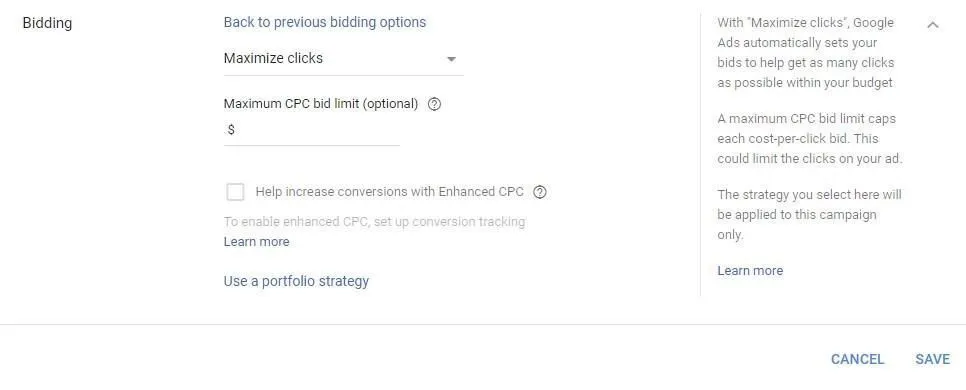
Increasing website traffic is the goal of the Maximize Clicks approach. The tactic automatically places bids to assist you to get the most clicks for your money. The approach is offered as a portfolio bid strategy spanning many campaigns, ad groups, and keywords or as a conventional strategy in a single campaign.
2. Target Outranking Share
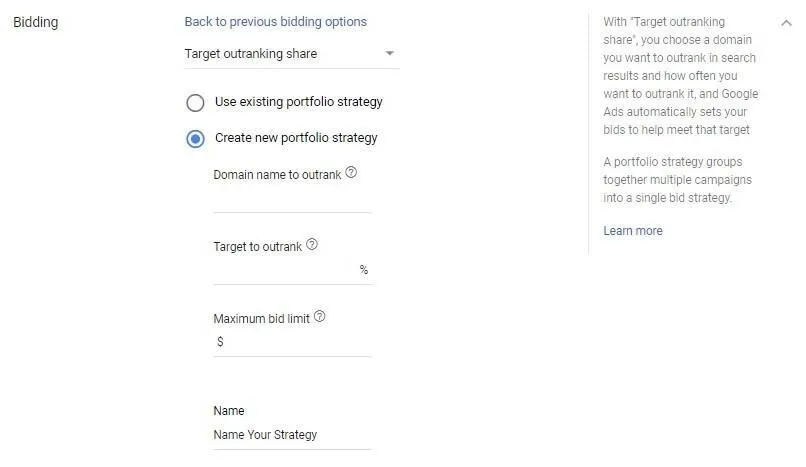
You can select the domain of another advertiser that you wish to outrank in ad position and how frequently with Target Outranking Share. Google will then set your search bids automatically to support achieving that goal. Only the portfolio bid technique is offered for Target Outranking Share.
3. Target Search Page Location
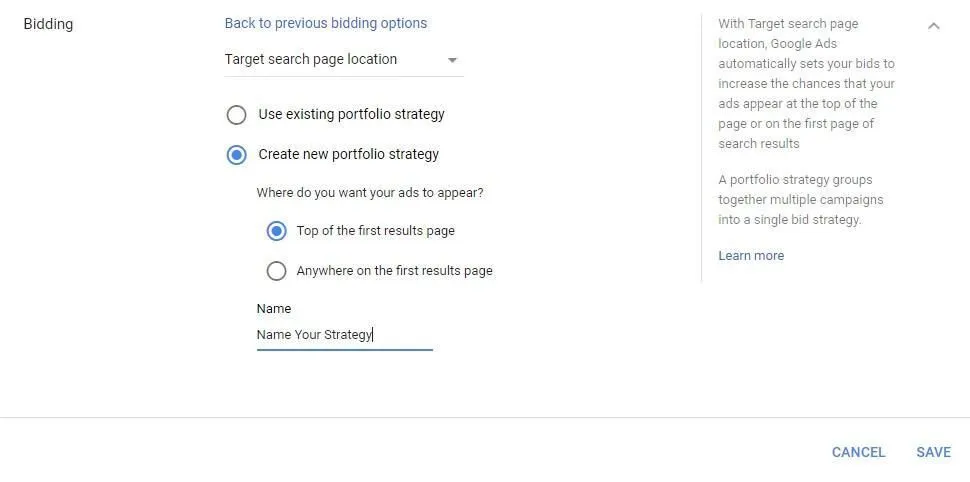
In order to maximize the likelihood that your ad will show up on the first page of a Google search or in one of the top ad positions, Target Search Page Location automatically sets bids. On the Search Network, it is only accessible as a portfolio bid strategy.
4. Target Cost-Per-Acquisition (CPA)
More control over your automatic bidding is possible with Target CPA. Google uses the tactic to establish Search or Display bids automatically so that you may obtain as many conversions as you can at the desired cost-per-acquisition that you have specified (CPA). Some conversions could cost more or less than what you were hoping for.
5. Optimized Cost-Per-Click (CPC)
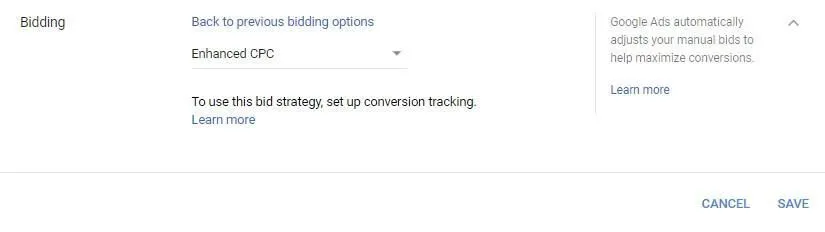
In order to assist you to increase conversions while attempting to maintain the same cost per conversion, Google will automatically modify your manual bids when you use ECPC. When employing Manual CPC bidding or as a portfolio bid strategy, ECPC is an optional feature.
6. Maximize Return On Ad Spend (ROAS)
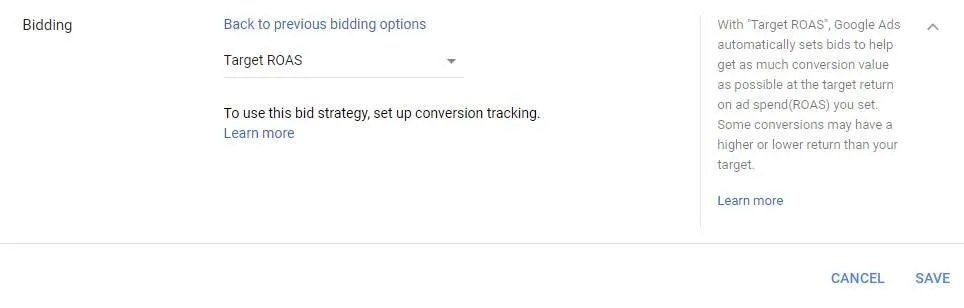
Your bids are automatically adjusted by Target ROAS to assist you maximise conversion value at the specified ROAS (the average value you receive in turn for every dollar you spend on ads). Some conversions could return more or less than what you expected. Both a portfolio bid strategy and a typical campaign bid strategy are offered that use target ROAS.
7. Optimize Conversions
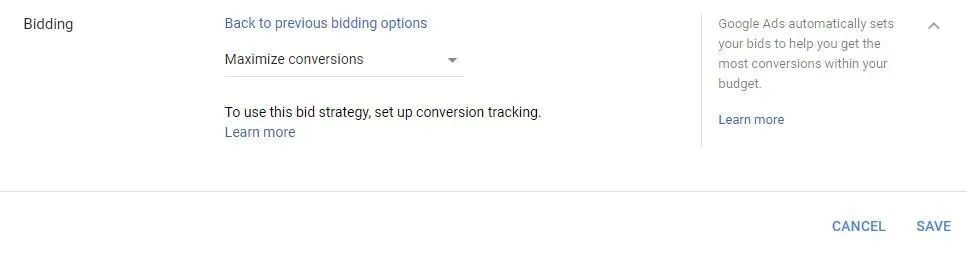
This tactic automatically places bids to maximize conversions for your campaigns without exceeding your budget. Google optimizes for a larger volume of conversions using this tactic. Maximize Conversions is a normal campaign strategy that is offered, although it is not a portfolio bid strategy.
On the other hand, if you choose to go with manual bidding, you would have to handle his keyword bids on the Google ads platform. One major advantage of choosing manual bidding is that it lends more control to advertisers on how they want to set up their ads.
In general, advertisers and businesses count on experience, instinct, and study of historic keyword performance data to make their decisions. This process is quite complex and asks for a high level of patience, time, and PPC knowhow to ensure a good return on investment (ROI).
Stay Away From Common Google Ad Mistakes
Last but not the least, try to avoid committing common Google ad mistakes that can hamper your ad’s performance. These mistakes are listed below:
- Choosing an inappropriate keyword match
Keyword match is not a foreign term. Things like a broad match, exact match, and phrase match are pretty common in Google ads management. If you choose the wrong keyword match, it would be difficult for your ad to target your audience.
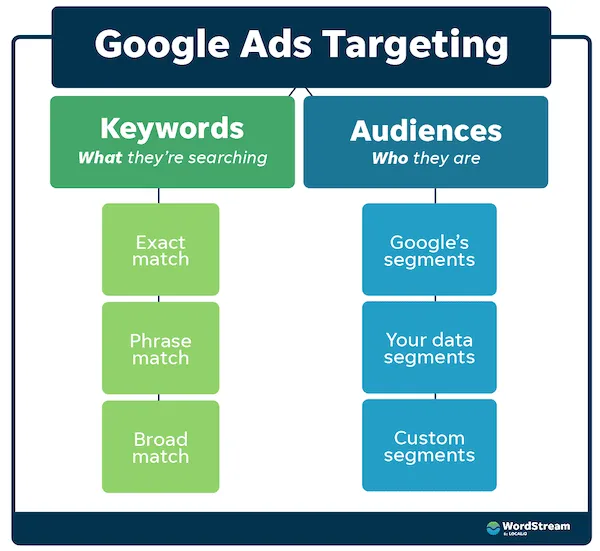
For instance, a wide match will show your advertisement when a user searches for a term that is similar to your target phrase. When you’re first exploring and accumulating data, this may work well. You wouldn’t want to utilize "precise match" if you don’t have a lot of knowledge about your audience since you wouldn’t have the statistics to support it.

Unprofessional Ad Copy

Improper Clear Margins
Benefits Of Hiring Eglogics Softech For Google Ads Management Services
Eglogics Softech is a leading digital marketing agency that provides Google ads management services. With years of experience in managing Google ads, Eglogics Softech has the expertise and knowledge to help you get the most out of your Google ads campaigns.
Here are some of the benefits of hiring Eglogics Softech for Google ads management services:

#1 Experienced Team
#2 Comprehensive Services
#3 Proven Results
#4 Flexible Pricing
#5 Regular Tracking & Adjustments
How Much Should You Invest In Monthly Google Ads Services?
The actual budget you allocate for Google Ads can vary significantly, ranging from as little as 10,000 INR to more than 2,00,000 INR. The specific amount you should invest depends on several factors, including your campaign objectives, target demographics, search volume, and industry sector.
Determining the right budget for your Google Ads campaign is particularly crucial when your goal is to generate a substantial number of leads beyond your current results.
Estimating the cost of acquiring visitors is the next step in assessing the Google Ads budget required to achieve your objectives. To estimate this cost for Google Ads (formerly known as Google AdWords), you can rely on the cost per click (CPC) for keywords found in the Google Ads Keyword Planner.
For relevant searches, the average CPC, as indicated by a simple search using the Google Keyword Tool, might be around $5. If you're looking to advertise on the Google Search Network, PPC (Pay-Per-Click) can be a cost-effective and feasible choice, with advertisers potentially spending $1 to $2 per click. This makes it an attractive option for promoting your business.
How To Hire The Best Google Ads Management Company In India?
Understanding the intricacies of Google Ads management can be quite challenging, which is why many businesses opt to hire a Google Ads campaign management company to handle every aspect of their campaigns. However, choosing the right agency is crucial for achieving better audience reach, cost-efficiency, a smoother campaign process, and more desirable results.
Here's a guide on how to select the best Google Ads campaign management company:
- Determine Your Campaign Objectives: The first and foremost step is to define your campaign objectives. Whether you want more website visitors, an expanded client base, increased leads, sales, or brand recognition, it's essential that the digital marketing agency you choose understands your specific needs to deliver the best outcomes.
- Define Your Budget: Clearly establish the budget you are willing to allocate for your ad campaign. Having a well-defined budget will help you choose an agency that can make the most effective use of your resources. An advantage of Google Ads management is the ability to pause and resume campaigns based on the agency's analysis.
- Select an Experienced Company: Experience is invaluable in any industry, and it's no different in digital advertising. Understanding how Google Ads algorithms work takes time and practice. An agency with experience in managing multiple advertising campaigns is more likely to know what works, what doesn't, and how to enhance ads for better results.
- Check for Certification: Since you're investing your money in PPC marketing, it's essential to ensure that your PPC management company is certified. While a company may claim to have knowledge and skills, having Google Ads certification is a valuable sign of commitment to PPC marketing. Certification demonstrates that a professional or expert has passed an exam to qualify, indicating their expertise in the field. It's a quality assurance that they understand the platform and can deliver effective campaigns.
What to Check for When Hiring a Google Ads Management Company In India?
Below are some of the important factors to consider while hiring the best Google ads campaign management company.

Expertise

Target Audience/Business Analysis

Pricing

Reputation

Client Choices

Reporting Capabilities
Beyond just the raw data, what truly counts is the "so what?" — in other words, the insights that your Google AdWords agency can derive from the data to enhance your strategy. Your PPC partner should provide not only performance metrics but also identify opportunities and implications for your ongoing strategy.
The ability of your account to track conversions from Google Ads is a make-or-break factor. After all, how can you make improvements if you don't know what's working and what isn't? Conversion tracking allows you to determine which ads are performing best.
With this knowledge in hand, you can fine-tune various aspects of your campaigns, including keywords, budget allocation, bidding strategies, and more. You can also apply successful tactics from your high-performing ads to enhance the performance of those that need improvement.
Tracking Conversion In Google Ads
Monitoring conversions in Google Ads involves several steps, including defining your conversions, setting up tracking tags, and selecting an attribution model. Let's break down these terms to give you a clear understanding of what they mean for your Google Ads account.
Conversions are essentially meaningful actions that users take after seeing your ad. The specific definition of a conversion can vary from one business to another. It may include activities such as engaging in live chat, making phone calls to your company, clicking on specific web pages, watching videos, submitting forms, and more. Conversions represent the valuable outcomes you want to track and measure as a result of your advertising efforts. Defining what constitutes a conversion is a crucial first step in the process.
Conversion Tracking
Attribution Modelling
Google Tag
Conversion Value
What Do Google Ads Experts Do To Optimize Google Ads Campaigns?
Put simply, the first and foremost job of a Google ads manager is to look after each & every element of a Google ads campaign. However, the role may include a number of tasks that must be performed carefully in order to deliver better outcomes.
Let’s look at these tasks below:
- Conceptualizing Precise And Promising Google Ad Campaign Strategies
- Developing, Launching And Handling Different Types of Google Ad Campaigns
- Performing Keyword Research To Prepare A List Of Keywords (Phrase Match, Longtail, Exact Match) For Bidding.
- Look After Budget And Bidding Strategies To Ensure Optimum ROI.
- Doing AB Testing By Drafting Multiple Ad Copies With Varying Headlines And Description.
- Handling The Bids And Developing Campaign Strategies
- Preparing And Optimizing Beautiful And Relevant Landing Pages For Google Ads.
- Tracking KPIs For Performance Monitoring
- Planning For Audience Targeting
- Generating Timely And Accurate Reports For Ad Management And Insights
- Inspecting And Monitoring Current Ad Campaigns And Recommending On How To Optimize And Refresh Them.
- Readying Comprehensive Analysis And Ad Campaign Reports
- Analyzing The Latest Marketing Trends And Optimize Ad Campaigns According To That
- Recommending Fraud Prevention Strategies
- Giving Suggestions To Improve Campaign Creativity
Go Online & Grow Online
Tell us about your project
Let us help you get your business online and grow it with passion
Harness the full power of open-source frameworks, contact us and get a bespoke content-manageable website that suits exactly your needs and requirements.
Testimonials
SEE ALL